Saturday, 14 January 2012

Au Revoir, AAA

Standard and poor today announced the somewhat surprising news that France had lost its top AAA status. Other European countries such as; Italy, Spain, Portugal and Cyprus were also cut two notches prompting a large fall in stock markets.

Spain: Downgraded from: AA- to A
Austria: Downgraded from: AAA to AA+
France: Downgraded from: AAA to AA+
Italy: Downgraded from: A to BBB+
Portugal: Downgraded from: BBB- to BB-

The news comes at a terrible time for Nicholas Sarkozy, with elections looming there is a real danger that the latest set of bad news will undermine his bid to become President once more. The bad news has also meant that the euro has reached a new low to the dollar whilst also dropping against the pound at 82.9p.

This fall in credit ratings for such a large number of countries can only spell bad news for the European Union. It now means that borrowing costs are going to be vastly inflated for those whose credit rating has been cut and will further deter investors from feeding much needed money into Europe to try and overcome the economic crisis.

The European Union is now relying upon the European Central bank to ease the crisis through quantitative easing a measure that Angela Merkel, the German Chancellor has thus far prohibited.


Thursday, 12 January 2012

So close, yet so far...

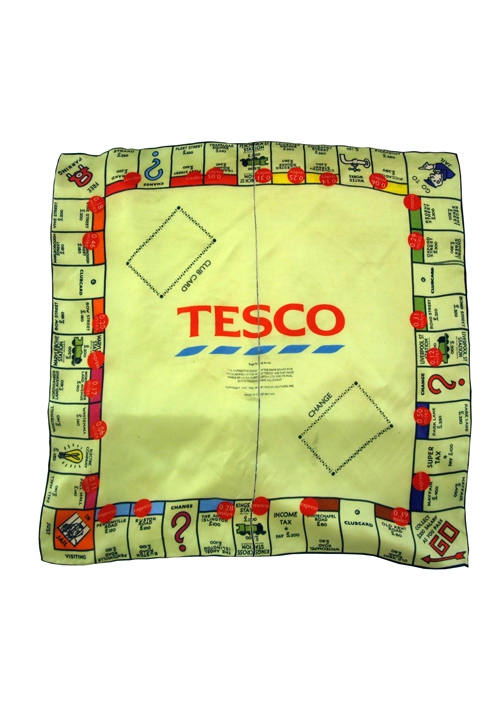
...Tesco has looked on the verge of a monopoly of the retail market ever since they managed, against all the odds to survive the recession and continue on their upwards curve to dominance. Today, however, for the first time in a number of years Tesco suffered a setback, and not just a minor one.

Is the Tesco monopoly dream fading?
Sales over the Christmas period for the company were down by 2.3%, causing a dramatic fall in share prices by 14%, shedding over £4billion of the companies value. Even more worrying for the retail giant is that this fall in sales comes at a time when fellow retailers such as Sainsburys and Morrison's have announced that sales over the same period have actually increased.

But, why is it now that the brakes have suddenly halted the seemingly unstoppable Tesco train. 

Tesco themselves have pinned the blame on their big 'Big price drop'. Tesco personally believe that although, the price drop put pressure on the margins, they did not receive a drive in sales as anticipated to compensate for it.

Another view of this fall in sales could be that the UK public has simply grown fed up of Tesco monopolizing the market and building obscene mega structures on the outskirts of tranquil towns. This consensus is certainly backed up by the fact that like for like sales in the USA rose by 19.3%, figures that compare highly favorably to those of their UK branch of stores. 

Although, Tesco chief executive, Philip Clarke will certainly be feeling the 'heat' to try and turn around these sales figure in the first quarter. They are by no means disastrous, Tesco still remain the dominant force in the retail market with their 30.1% share a long way ahead of second placed Sainsburys who currently have a 16.8% allocation in the market. 

Tesco may well still be the dominant force in the market, but any hopes for monopolization in the near future appear to have been derailed.

Monday, 9 January 2012

The Monday Night Economics Pub Quiz

Tired of 2012 already? Well why don't you cheer yourself up by participating in the latest installment of the Monday night economics pub quiz.

1) Which BMW owned car company announced record profits and sales during 2011 last week?
a) Rolls-Royce              b) Mini                  c) BMW
2) Which country managed to create over 200,000 jobs in December helping to control their unemployment rates?
a) China                        b) USA                 c) UK
3) What British supermarket announced a slow down in sales over the Christmas period?
a) Tesco                        b) Morrisons         c) Waitrose
4) What is the name of the Swiss bank chief who quit his post today amid the currency trading scandal?
a) Phillip Hildebrand      b) Sepp Blatter      c) Stanislas Wawrinka
5) Who did David Cameron accuse of being overpaid last week?
a) City bankers              b) GP's                 c) Pilots

How did you do? Well you can find out, the answers are below.
Confused.com
Answers: 1-a+c, 2-b, 3-b, 4-a, 5-a

Sunday, 8 January 2012

The mystery of 'hire and fire'


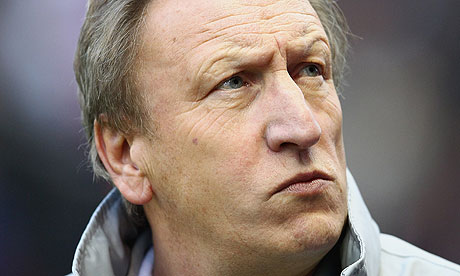
Neil Warnock’s recent dismissal as Queens Park Rangers football clubs manager made me think. Why do we ‘hire and fire’ so much and at what cost does it come to both employers and the nation as a whole?

Neil Warnock...A recent casualty of the 'hire and fire' mentality
Hiring is of course necessary for both the stability and stimulation of the economy. If companies were not to hire, then their growth, barring a miracle would remain static and labour reliant companies would struggle to expand. Firing is a more complex issue, often dictated by outside markets company boards are often forced into redundancies when a crash in the market so warrants.

The total cost of these redundancies though, is the truly worrying fact. The average redundancy in the UK costs £16,375 and when you take into account the fact that since the recession over  1.9million people have lost their jobs the numbers begin to become genuinely worrying. Every year employees are spending over £8billion a year on pay outs. To put this into context the Olympics is expected to cost the British government £9.3billion. This means that in theory if no-one were to get fired for 14months the 2012 games would pay for itself. Happy times indeed.

There is of course, no chance of this happening, so in the meantime it seems that employers will quite literally burn money away as they continue to ‘hire and fire’. 

Friday, 6 January 2012

Another one bites the dust!


Blacks leisure has become the latest in a long line of companies to fall into administration, putting 3500 jobs at risk in the process. Whilst, the operator of Blacks and Millets had previously hoped that they would have found a buyer before it got to this stage, it is not short of suitors once its assets are put onto the market on Monday.
Blink and you'll miss it!
Favourites to snap up the brand include Mike Ashley’s Sports Direct and Peter Jones, who is best known for his role as a Dragon on Dragons Den (he has recently denied such a deal on Twitter such is the world nowadays). With shares closing at 1.38p, the Blacks leisure group is expected to be valued around £10million which will mainly take into account the 306 stores and assets that Blacks currently owns.
In an attempt to save as many jobs as possible a controversial insolvency operation will be undertaken. This will involve the buyer being able to wipe out any debts the group may have and reject any unprofitable stores. This is hoped to allow the new owners to plough more money into re-establishing the firm on the market and help minimise the number of redundancies.
Blacks joins an ever growing list of companies which have into administration including; La Senza, Hawkins Bazaar and Barratts. I personally think that this growing trend is likely to continue with firms such as Kitchen Company Homeform and the DIY shop Focus likely to face the same fate in the upcoming months. One thing for sure is that 2012 is going to be an even longer and harder struggle for both employees and employers than could have possibly been expected.

Wednesday, 4 January 2012

An all too common problem...


In the wake of Danny Care’s omission from the England Rugby Squad for the forthcoming Six-nations due to being caught drink driving, it has seemingly become apparent that he suffers from an alcohol problem.

This is not the first time that Danny Care has been punished for indiscipline when drunk. Only three weeks ago he was reprimanded for being drunk and disorderly by head coach Stuart Lancaster for an incident which he described as “completely unacceptable”.

Danny Care is suffering from a common problem
The effects of this case of alcoholism are relatively simple. The national side have been deprived of one of their better players, whilst Care until consulted will continue to suffer from alcoholism and will therefore continue to make the same mistakes he is making. However, in other cases alcoholism can have much more serious effects and on a national scale the economic effects can be huge.

In the UK, alcoholism leads to a serious reduction in the productivity of the workforce. It is estimated that the inability to work and the premature deaths that alcoholism causes costs the UK economy £6.4billion each year. Alcohol use can also reduce employment figures in the UK, this account for a further £1.9billion cost to the UK tax payers as there is a reduction in unemployment activity.

Alcoholism is a serious problem in the UK and needs to be addressed soon. Over 17million working days are lost each year to alcohol and the economic effects are huge, putting a humongous strain on the NHS.

Contrasting fortunes


Tough times...

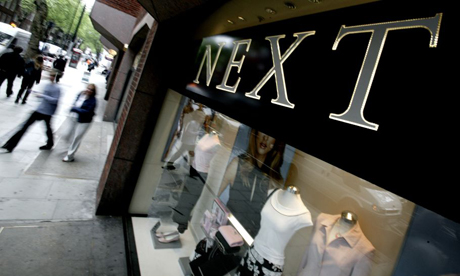
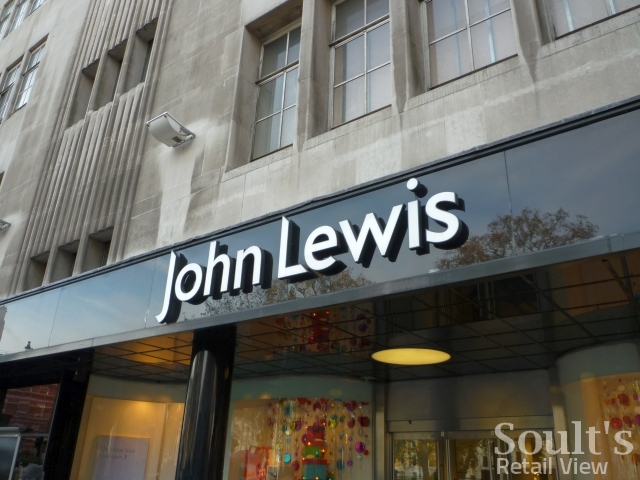
Whilst, John Lewis enjoyed ‘outstanding’ sales over the festive period, clothes retailer Next had contrasting fortunes seeing a fall in sales lead to lower share prices.

Sales in John Lewis were up by 6.2% from a year ago which was largely helped by ‘out of this world’ sales leading up to Christmas Eve and its biggest ever week ending on December 17th which saw a collective total of £133.1million of revenue being brought in. Next, on the other hand saw a disappointing set of results reveal that since the start of January 2011 sales have fallen by 2.2%. Although sales via the internet were up, high street sales diminished to such an extent that both Next and the rest of the high street look set to endure a torrid period going into the traditionally stale spring.
Simply the best...

To find out just how torrid 2012 will be for the high street, will only truly be revealed to a greater extent next week when Marks and Spencer’s unveil their festive figures for last year. One can only hope that that they lean to those of fellow retailers John Lewis than those of Next.