Monday, 20 August 2012

Book review: Soccernomics

Soccernomics is a very much a 'does what it says on the tin' style book. Whilst this no bad thing it does mean that Stefan Symanskis and Simon Krupers work is sometimes predictable and rather unimaginative. For example large periods of the book are dedicated to finding the biggest overachieving football nation. This process is then repeated for general sports, resulting in a rather tiresome read. However, despite this many aspects of Soccernomics make it a worthwhile read.

One of these is the in depth analysis that Kruper and Symanski undertake when it comes to the research that is the basis of the book. With serious thought and care evidently being put into the research it makes for a inquisitive read as the methodology that the two economists use is in itself as fascinating as the overall conclusions that they reach (which are often debatable to say the least!). The data itself is portrayed in a clear and simple manner and whilst there will always be a risk of data overload, interesting sub plots can constantly be detected helping to allow the book to flow.

Whilst the tittle of the book indicated it is for both the hardened football fan and casual economist, im not totally sure this is the case. With economic terminology such as the 'paradox of power'(where an underdog upsets the odds due to the favourite looking at the wider picture) and 'zibhs rule'(the ratio of rankings) being casually tossed around the book isn't as accessible as it could have been. This being said Kruper and Symanski have done a good job of plugging a gap in a fairly congested market where the have managed to add intelligence and guile to what they call in the context of the FTSE 100 a 'small industry'.

Overall rating- 7/10

Monday, 27 February 2012

The monday night economics pub quiz

After a brief spell on the sidelines the monday night economics pub quiz is back in its fourth installment. prepare to rack your brains to the limit!

1) Which English cricket ground recently got renamed as the Ageas bowl in a sponsorship deal with the insurance company?
a) Trent bridge                    b) Rose bowl                     c) New road

2) Who announcd that they had recorded the biggest profits of any Western bank in 2011?
a) Barcalays                        b) HSBC                            c) Lloyds

3) Vodafones chief executive recently slammed phone regulators for saying they were slowing the development of 4g by forcing down prices. But what is his name?
a) Richard Branson             b) Majorie Scardino          c) Vittorio Colao

4) How much did the UK's GDP fall by in the last three months of 2011?
a) 0.2%                                b) 0.4%                              c) 3.6%

5)  In an effort to cut down on organised crime the US government has freezed the financial assets of two groups. The yamaguchi-guma yazuka and...
a) Brothers circle                 b) Mafia                            c) Triads

Tough? Or are you a bonefied economics buff? Lets find out the answers are below...


Answers: 1-b, 2-b, 3-c, 4-a, 5-a

Sunday, 26 February 2012

And back we go...


Which way will we go?

Last week the UK economy was officially announced to have shrunk by 0.2% in the last three months of 2011. The announcement was a major boost to the economy which had been hoping for an upturn after the preeciding quarter had yeilded a 0.6% growth.

The fall comes amid speculations that the UK’s economy is set for another year of fluctiations a notion suported by Sir Mervyn King the governor of the Bank of England who warned the economy is likely ‘to zig-zag’.

The main contribution to the fall was the drop in business investment on capital goods causing a fall in the UK’s aggregate demand and therefore economic growth. However, on a more positive note consumer expenditure increased by 0.5% indicating an increase in consumer confidence in the market and hopefully an upturn in the future of the high-street.

Despite, this whatever way you look at these figures, this is worrying times for the UK economy. Another quarter of negative growth and another recession will be on the cards leading to the ‘double dip’ many feared at the end of 2010. Whilst, i personally don’t think we will go into another recession in three months time this is certainly a setback for the UK’s economic recovery and will only further add to the coalition governments worries.

Sunday, 5 February 2012

How could the government 'jumpstart' the economy?

What can he do?
After the recent announcement that in the last quarter the UK's economy receded by 0.2%, the distinct possibility of another recession is looming. Many have been calling for the government to intervene into the economy. Bu, what could they do and would it work?

One such way in which the government could intervene is through the process of quantitative easing. (I.E printing money) This wold allow the Bank of England to increase the value of government assets whilst maintaining the low 0.5% interest rate. However, quantitative easing may also lead disillusioned; banks, investors and businesses to simply sit on the money and save it for when there is an upturn in the markets fortunes.

A widely spoken about option recently has been to cut people taxes in the form of income tax cuts. This would enable the poorer section of the economy to have more money to spend and therefore provide an injection of funds into the economy. What income tax cuts do rely on however, is the 'poor' spending this extra income rather than paying of depts or saving it. This therefore is a major flaw of this form of government stimulated economic growth.

My final but probably least likely way in which the government can kick start the economy is to 'stoke inflation'. This involves giving people to hoard cash something even greater to fear by hiking up inflation. By rising prices people may be encouraged to do something more productive with their money like spending it. The flaw? Well although hypothetically stoking inflation is all well and good it is highly unlikely that it can actually be achieved and even less probable in the time period that the government so likely desires.

Although, all forms of government intervention have their benefits, most such as toking inflation are implausible and not feasible under current economic conditions. This means that feasibly to improve the UK's economy the government needs to: Inject money into the economy
                                 Improve the confidence of both the consumers and producers so that more money is spent.

Saturday, 14 January 2012

Au Revoir, AAA

Standard and poor today announced the somewhat surprising news that France had lost its top AAA status. Other European countries such as; Italy, Spain, Portugal and Cyprus were also cut two notches prompting a large fall in stock markets.

Spain: Downgraded from: AA- to A
Austria: Downgraded from: AAA to AA+
France: Downgraded from: AAA to AA+
Italy: Downgraded from: A to BBB+
Portugal: Downgraded from: BBB- to BB-

The news comes at a terrible time for Nicholas Sarkozy, with elections looming there is a real danger that the latest set of bad news will undermine his bid to become President once more. The bad news has also meant that the euro has reached a new low to the dollar whilst also dropping against the pound at 82.9p.

This fall in credit ratings for such a large number of countries can only spell bad news for the European Union. It now means that borrowing costs are going to be vastly inflated for those whose credit rating has been cut and will further deter investors from feeding much needed money into Europe to try and overcome the economic crisis.

The European Union is now relying upon the European Central bank to ease the crisis through quantitative easing a measure that Angela Merkel, the German Chancellor has thus far prohibited.


Thursday, 12 January 2012

So close, yet so far...

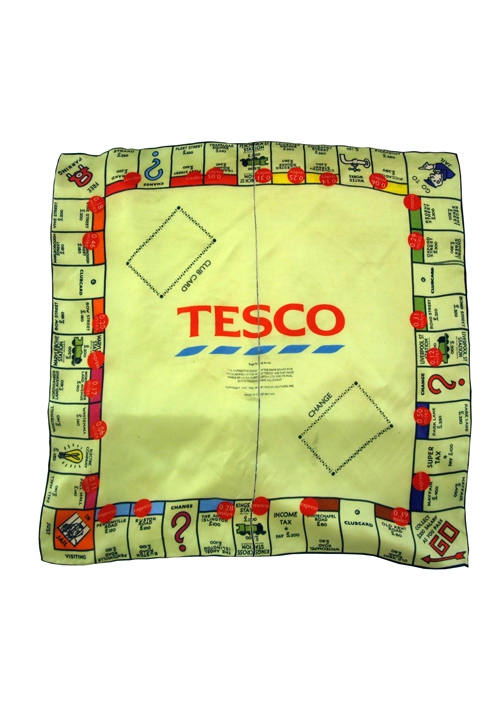
...Tesco has looked on the verge of a monopoly of the retail market ever since they managed, against all the odds to survive the recession and continue on their upwards curve to dominance. Today, however, for the first time in a number of years Tesco suffered a setback, and not just a minor one.

Is the Tesco monopoly dream fading?
Sales over the Christmas period for the company were down by 2.3%, causing a dramatic fall in share prices by 14%, shedding over £4billion of the companies value. Even more worrying for the retail giant is that this fall in sales comes at a time when fellow retailers such as Sainsburys and Morrison's have announced that sales over the same period have actually increased.

But, why is it now that the brakes have suddenly halted the seemingly unstoppable Tesco train. 

Tesco themselves have pinned the blame on their big 'Big price drop'. Tesco personally believe that although, the price drop put pressure on the margins, they did not receive a drive in sales as anticipated to compensate for it.

Another view of this fall in sales could be that the UK public has simply grown fed up of Tesco monopolizing the market and building obscene mega structures on the outskirts of tranquil towns. This consensus is certainly backed up by the fact that like for like sales in the USA rose by 19.3%, figures that compare highly favorably to those of their UK branch of stores. 

Although, Tesco chief executive, Philip Clarke will certainly be feeling the 'heat' to try and turn around these sales figure in the first quarter. They are by no means disastrous, Tesco still remain the dominant force in the retail market with their 30.1% share a long way ahead of second placed Sainsburys who currently have a 16.8% allocation in the market. 

Tesco may well still be the dominant force in the market, but any hopes for monopolization in the near future appear to have been derailed.

Monday, 9 January 2012

The Monday Night Economics Pub Quiz

Tired of 2012 already? Well why don't you cheer yourself up by participating in the latest installment of the Monday night economics pub quiz.

1) Which BMW owned car company announced record profits and sales during 2011 last week?
a) Rolls-Royce              b) Mini                  c) BMW
2) Which country managed to create over 200,000 jobs in December helping to control their unemployment rates?
a) China                        b) USA                 c) UK
3) What British supermarket announced a slow down in sales over the Christmas period?
a) Tesco                        b) Morrisons         c) Waitrose
4) What is the name of the Swiss bank chief who quit his post today amid the currency trading scandal?
a) Phillip Hildebrand      b) Sepp Blatter      c) Stanislas Wawrinka
5) Who did David Cameron accuse of being overpaid last week?
a) City bankers              b) GP's                 c) Pilots

How did you do? Well you can find out, the answers are below.
Confused.com
Answers: 1-a+c, 2-b, 3-b, 4-a, 5-a